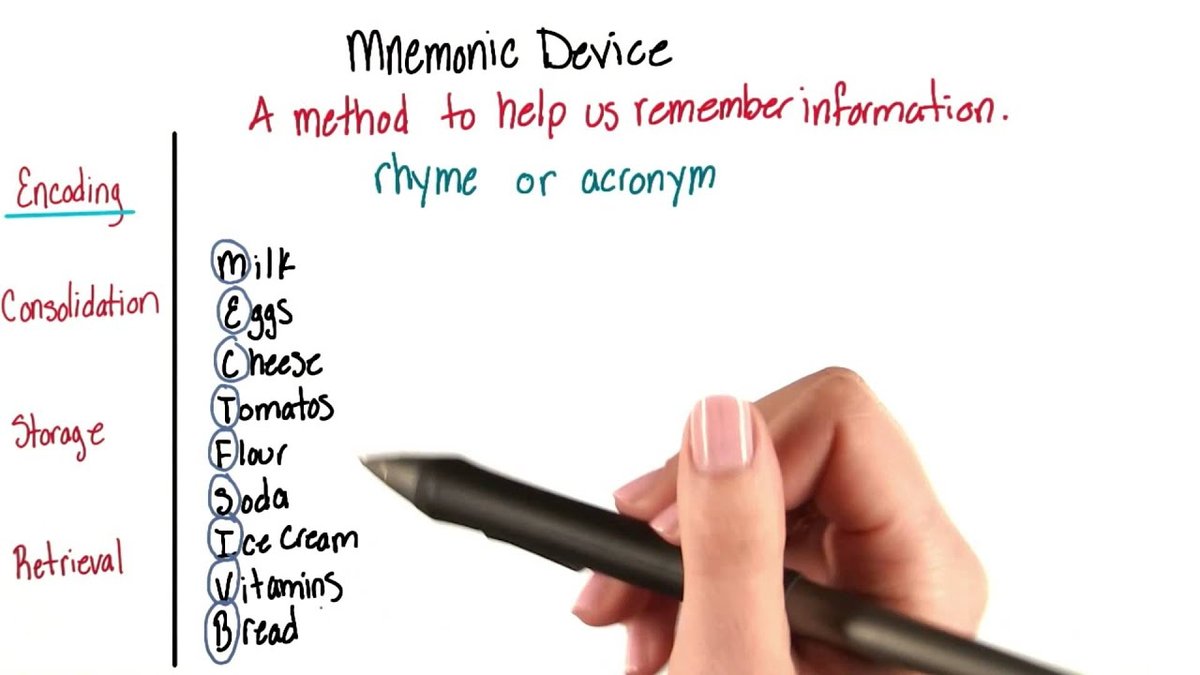
Ever wished you had a superpower for remembering names, dates, or complex information? You're not alone. The human brain is an incredible storage device, but it often benefits from a little strategic organization. This is precisely where mnemonic devices come into play, offering clever mental shortcuts to lock in details. Now, imagine a tool that could craft these ingenious memory aids for you on demand. That's the power of exploring How Mnemonic Device Generators Work and Their Benefits – a game-changer for anyone looking to sharpen their recall and make learning stick.
At a Glance: Key Takeaways
- Mnemonics are memory hacks: They transform complex info into memorable associations, making it easier for your brain to store and retrieve.
- Variety is key: From acronyms to 'memory palaces,' different techniques suit different types of information and learning styles.
- Generators automate creativity: These tools leverage algorithms to quickly suggest personalized mnemonic devices, saving you time and boosting effectiveness.
- Benefits extend beyond recall: Mnemonics promote deeper learning, active engagement, and can enhance cognitive function across all ages.
- Smart use is crucial: While powerful, mnemonics are best used as part of a broader learning strategy, not as a standalone solution.
The Power of Mental Shortcuts: Why Mnemonics Are Your Brain's Best Friend
Think about how your brain naturally files away memories. It’s not a sterile, sequential database; it’s a vibrant, interconnected web of images, emotions, sounds, and experiences. Mnemonic devices don't fight this natural process; they leverage it. By acting as mental shortcuts, these techniques help you encode, store, and retrieve information more efficiently, forging strong, meaningful associations between new, often abstract, data and what you already know.
These aren't just parlor tricks. They engage deeper levels of processing, often tapping into the brain's incredible capacity for visual imagery, verbal associations, or spatial relationships. This active engagement is critical, facilitating the crucial transfer of information from your fleeting working memory into the more robust realm of long-term memory. The result? You can actively learn, recall large amounts of difficult information, and retrieve it quickly when you need it most.
Unpacking the Mnemonic Toolkit: Popular Techniques You Can Use
Before we delve into how generators simplify the process, let's explore some of the most effective mnemonic devices, each designed to tackle different memory challenges. Understanding these foundational techniques will illuminate the 'logic' behind what a generator creates.
1. Acronyms and Acrostics: Short & Sweet Reminders
These are perhaps the most common and straightforward mnemonic types. They're fantastic for remembering lists, sequences, or key concepts.
- Acronyms: These are words formed from the first letter of a group of words or names you need to remember. Think of "HOMES" for the Great Lakes (Huron, Ontario, Michigan, Erie, Superior), or everyday examples like NATO, NASA, radar, laser, and SCUBA. They condense a lot of information into a single, pronounceable word.
- Acrostics (or Sentence Mnemonics): Here, each word's first letter in a memorable sentence represents an item on your list. "My Very Educated Mother Just Sent Us Nine Pizzas" is a classic for remembering the order of the planets (before Pluto's reclassification). For musical notes on the lines of a treble clef, "Every Good Boy Does Fine" is instantly recognizable. These work because a coherent sentence is far easier to recall than a string of disconnected letters.
2. Association: The Art of Mental Linkage
Our brains thrive on connections. Association mnemonics capitalize on this by linking new, unfamiliar information to something you already know well. The trick? Make the association vivid, unusual, or even silly.
- Imagine you meet a new colleague named Todd. Instead of just trying to remember "Todd," you might instantly associate him with your Uncle Todd, recalling his laugh or distinctive haircut. Suddenly, the new name has an existing anchor in your memory.
- Another classic example involves Isaac Newton and his apple. While the real story might be more complex, we easily associate "Isaac Newton" with "Isaac eating a Fig Newton" – a strange, vivid image that helps cement the name to the concept of discovery and gravity. The stranger the link, often the better!
3. Chunking: Mastering the Seven Plus or Minus Two Rule
When information becomes overwhelming, breaking it down into smaller, more manageable "chunks" is incredibly effective. The pioneering psychologist George A. Miller famously suggested that verbal short-term memory capacity is roughly seven items, plus or minus two. Chunking works by turning many items into fewer, more meaningful "chunks."
- Consider phone numbers. We rarely remember "1234567890" as ten individual digits. Instead, it's "123-456-7890" – three chunks.
- Social Security numbers and even complex passwords (e.g., transforming
P3850tf21intoP38-50-tf21) benefit from this strategy. By grouping related pieces of information, you effectively expand your short-term memory's capacity.
4. Method of Loci (Memory Palace Technique): Walking Through Your Mind
This ancient technique, reputedly used by the Greek poet Simonides of Ceos, is one of the most powerful and involves remembering items based on their imagined locations within a familiar area – your "memory palace."
- You start by envisioning a space you know intimately, like your childhood home, your daily commute, or your workplace.
- Then, you mentally "place" exaggerated, interactive, or silly forms of the items you need to remember at specific locations within that space.
- To recall the information, you simply take a mental walk through your familiar space, "picking up" each item as you go. The spatial relationship provides a natural, ordered cue for retrieval. This technique is incredibly effective for remembering long lists, speeches, or sequences of facts.
5. Songs and Rhymes: Making Information Sing
Music and rhythm have a profound effect on memory. Think about how easily children learn the alphabet through song, or how you can recall the lyrics to dozens of songs, even from years ago.
- Rhymes provide a similar structure, making information catchy and memorable. "In 1492, Columbus sailed the ocean blue" is a classic example of using rhyme to cement a date.
- Creating a simple jingle or song for a list of facts, a foreign language conjugation, or a historical sequence can make otherwise dry information incredibly sticky.
Beyond Manual Creation: How Mnemonic Device Generators Work Their Magic
Manually crafting effective mnemonic devices, especially for complex or extensive material, can be time-consuming and sometimes challenging. This is where mnemonic device generators step in, transforming a potentially laborious task into an efficient, creative, and personalized experience. But how do they actually work?
At their core, these generators leverage advanced algorithms, often powered by artificial intelligence and natural language processing (NLP), to analyze the input you provide and then suggest suitable mnemonic techniques. Think of them as a highly intelligent assistant who understands how memory works and has a vast database of associative patterns.
Here's a breakdown of the process:
- Input Analysis: You start by feeding the generator the information you need to remember. This could be a list of vocabulary words, a sequence of historical events, a set of medical terms, or even a series of numbers. The more context you provide, the better.
- Keyword and Concept Extraction: The generator's AI first analyzes your input to identify key words, phrases, and underlying concepts. It understands the structure of the data – is it a list? A definition? A sequential process?
- Mnemonic Strategy Matching: Based on the type of information, the generator then applies its knowledge base of mnemonic techniques:
- For lists or sequences: It might suggest acronyms (taking the first letter of each item), acrostics (generating a sentence where each word starts with a key letter), or even a basic "chaining" method where items are linked together in a story.
- For abstract concepts or difficult words: It might look for phonetic similarities to existing, familiar words (association), or suggest visual imagery based on common metaphors or related concepts. For example, if you input "amphibious," it might suggest "amphi-BI-ous sounds like 'both ways' + 'BI-cycle' which goes on land and water."
- For numbers: It might propose chunking strategies or even convert digits into images or sounds if it incorporates a major system approach.
- Creative Association and Suggestion: This is where the "magic" happens. The generator doesn't just apply rules; it often taps into a vast lexicon of words, images, and common knowledge to create genuinely creative and memorable associations. It might draw upon:
- Phonetic resemblance: Finding words that sound similar to the target information.
- Semantic relationships: Identifying related concepts, synonyms, or antonyms.
- Common imagery: Suggesting visual cues that are universally recognized or easily imagined.
- Humor and absurdity: Often, the more unusual or humorous a mnemonic, the easier it is to remember. The AI can be trained to generate slightly outlandish suggestions.
- Output Generation and Refinement: The generator then presents you with one or more mnemonic suggestions. Advanced generators may even allow you to provide feedback, refine the generated output, or specify a preferred type of mnemonic (e.g., "give me an acrostic," "give me a visual image").
Tools like Our mnemonic device generator exemplify this process, streamlining the creation of powerful memory aids and putting personalized learning directly at your fingertips. They essentially bridge the gap between knowing about mnemonics and actually using them effectively.
The Everyday Advantage: Benefits of Using Mnemonic Devices and Generators
The benefits of incorporating mnemonic devices into your learning and daily life are far-reaching, and generators amplify many of these advantages.
- Enhanced Recall and Retention: This is the obvious one. Mnemonics fundamentally improve your ability to remember complex information for longer periods. By providing a structured, often emotionally or visually rich hook, they make information "stickier."
- Faster Learning and Study Time: When you don't have to repeatedly rote memorize, you free up mental energy. Mnemonics allow for quicker initial encoding and significantly reduce the time spent on review, as retrieval becomes more efficient. Generators accelerate this by instantly providing options, bypassing the creative bottleneck.
- Deeper Engagement with Material: Creating or even selecting a mnemonic requires active processing of the information. You're not just passively reading; you're looking for connections, patterns, and ways to make it personal. This active engagement fosters a more profound understanding, even if the mnemonic itself is a shortcut.
- Overcoming Creative Blocks: For many, the toughest part of using mnemonics is coming up with a good one. Generators banish this hurdle, offering creative suggestions even when your own imagination feels tapped out. This is especially valuable when dealing with large volumes of diverse information.
- Versatility Across Domains: Mnemonic devices aren't just for students.
- Education: From memorizing historical dates and scientific concepts to anatomical terms and mathematical formulas, they're invaluable.
- Medical Training: Recalling complex procedures, drug names, and diagnostic criteria becomes much more manageable.
- Language Learning: Mastering new vocabulary, verb conjugations, and grammatical rules is a breeze with clever associations.
- Professional Settings: Remembering client names, industry jargon, presentation points, or workflow sequences can boost your career.
- Cognitive Health: For older adults, engaging with memory techniques like the Method of Loci can actively help maintain and even improve cognitive function.
- Reduced Stress and Increased Confidence: Knowing you have reliable tools to aid your memory can significantly reduce anxiety around tests, presentations, or important meetings. This boost in confidence can have a positive ripple effect on overall performance and well-being.
Making It Stick: Best Practices for Effective Mnemonic Use
While mnemonic generators are powerful allies, their effectiveness is maximized when paired with smart strategies.
- Personalization is Key: The most effective mnemonics are often the ones you create or personalize yourself. If a generator gives you a suggestion, feel free to tweak it to make it more relevant, humorous, or bizarre to your mind. The more meaningful it is to you, the better it will stick.
- Don't Rely Solely on Mnemonics: Think of mnemonics as powerful hooks, not the entire fishing line. They are tools for recall, but deep understanding still comes from genuine engagement with the material. Combine them with other learning strategies like active recall, spaced repetition, teaching others, and practical application.
- Visualize and Embellish: For techniques like the Method of Loci or associative mnemonics, the more vivid and multi-sensory you make your mental images, the better. Add sounds, smells, emotions, and exaggerated actions.
- Practice Retrieval: Regularly test yourself on the information using your mnemonics. The act of retrieving the memory strengthens the neural pathways and makes the mnemonic more automatic over time.
- Explore Different Techniques: What works for a list of words might not work for a complex sequence of numbers. Experiment with various mnemonic types to find what resonates best for different kinds of information and for your personal learning style. A generator can be a great way to quickly test different approaches.
Navigating the Nuances: Limitations and Smart Use
As powerful as mnemonic devices and their generators are, it's important to approach them with a clear understanding of their limitations. They are not a magic bullet, but rather a sophisticated tool.
- Individual Effectiveness Varies: What's a brilliant mnemonic for one person might be utterly forgettable for another. This is why personalization and experimentation are so crucial. Generators can offer multiple options, increasing the chance of finding a fit, but ultimate success depends on the user's interaction.
- Risk of Overreliance: Mnemonic devices excel at aiding recall, but they can sometimes lead to what's known as "shallow learning." If you only memorize a mnemonic without truly understanding the underlying concepts, you might recall the information but lack the deeper knowledge needed for critical thinking or problem-solving. Always strive for comprehension alongside memorization.
- Not a Universal Solution: Some types of information lend themselves more readily to mnemonics than others. Highly abstract concepts without clear associations, or information that requires nuanced interpretation rather than simple recall, might be less effectively served by these tools.
- Creation Can Be Time-Consuming (Manually): While generators mitigate this, creating truly original, effective, and elaborate mnemonics (like a full-blown Memory Palace for a textbook) can take significant effort. The trade-off is often worth it for high-stakes information, but it's a factor to consider.
The key is balance. Use mnemonics strategically for specific recall challenges, but always complement them with broader learning strategies that foster deep understanding and critical analysis.
Your Next Step: Building a Sharper Memory, One Mnemonic at a Time
In a world overflowing with information, the ability to effectively learn, store, and retrieve knowledge is more valuable than ever. Mnemonic devices offer a time-tested, brain-friendly pathway to achieving this, transforming daunting data into digestible, memorable chunks. And with the advent of mnemonic device generators, creating these powerful memory aids has become more accessible and efficient than ever before.
Whether you're a student facing exams, a professional mastering new skills, or simply someone eager to keep your mind sharp, understanding how mnemonic device generators work and their benefits opens up a new realm of cognitive possibility. Don't just wish for a better memory – actively build one. Start by experimenting with different techniques, letting a generator spark your creativity, and integrating these clever tools into your daily learning routine. Your brain will thank you.